
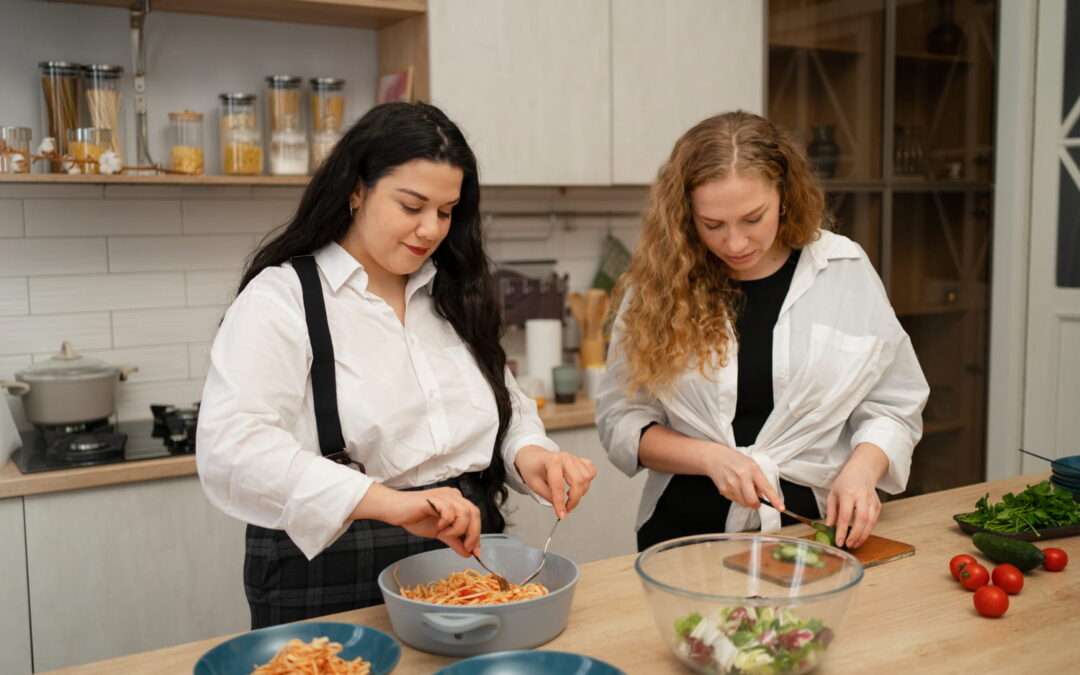
Most team-building events fail because they feel forced. Employees endure awkward icebreakers, then return to their desks unchanged. Cooking school classes succeed where others fail because they tap into something primal, our relationship with food and the people we share it with.
The 15-Minute Rule That Changes Everything
Professional chefs know something HR departments don’t: real teamwork emerges in the first fifteen minutes of kitchen chaos. When Sarah from accounting realises she can’t julienne vegetables and asks Dave from IT for help, hierarchy dissolves instantly. Dave, who’s been making ramen for his kids for years, becomes the expert. This role reversal rarely happens in conference rooms.
Why Failure Becomes Your Secret Weapon
Burnt garlic. Oversalted soup. Collapsed soufflé. In traditional team building, mistakes feel catastrophic. In kitchens, they’re on Tuesday. Teams learn to laugh at disasters, pivot quickly, and support whoever’s struggling. Last month, a finance team watched their head of department accidentally add salt instead of sugar to a dessert. Instead of panic, they problem-solved together, creating an unexpectedly delicious salted caramel sauce.
The Vulnerability Factor Nobody Talks About
Watching your usually composed colleague fumble with chopsticks or admit they’ve never cooked rice properly creates unexpected intimacy. Vulnerability in boardrooms feels risky. Vulnerability over wonky pasta shapes feels human. These moments build trust faster than any trust exercise ever could.
Temperature, Timing, and Tolerance Under Fire
Professional kitchens operate on split-second timing. Your team discovers who stays calm when three dishes need finishing simultaneously, who naturally coordinates others, and who thrives under pressure. These insights prove invaluable back at the office during project crunches.
Cultural Intelligence Through Cuisine
When teams cook dishes from different cultures, conversations shift from weather to family traditions, immigration stories, and childhood memories. Priya explains why her grandmother’s curry technique works better than the recipe book. Marcus shares why his jerk chicken marinade needs 24 hours, not two. These exchanges build genuine cultural understanding.
The Shared Plate Psychology
Eating together triggers ancient social bonding mechanisms. Breaking bread—literally—with colleagues activates the same neural pathways our ancestors used to establish tribal connections. Teams who eat their creations together report feeling “closer” than those who simply complete tasks side-by-side.
Return on Investment: The Numbers Game
Companies tracking post-activity productivity see 23% improvement in cross-departmental collaboration after culinary team building ideas. Unlike expensive outdoor adventures that intimidate half your staff, cooking school sessions engage everyone. Introverts shine in focused prep work. Extroverts excel at coordinating service. Everyone contributes meaningfully.